
One-click calling
A waiting vehicle can be called to the gatehouse or directly to the assigned loading bay; the driver is notified instantly with sound and visual signals.
Teherkapu module
Teherkapu's truck caller calls and directs waiting vehicles: as soon as a loading bay is free, the warehouse clerk calls the driver with one click, and the driver instantly sees on their phone or on the issued truck caller device where to go.
Without a truck calling system, drivers are paged over loudspeakers, called on the phone or searched for in person; waiting trucks park at the gate and on public roads, and a freed-up loading bay sits idle for minutes.
With Teherkapu, drivers wait in the designated waiting area and set off exactly when the loading bay is ready.
A waiting vehicle can be called to the gatehouse or directly to the assigned loading bay; the driver is notified instantly with sound and visual signals.
Drivers follow their status on their smartphone by plate number, without installing anything, or use a truck caller device issued at the gate.
Waiting messages with the expected call time, free-text messages and confirmation - in the driver's own language.
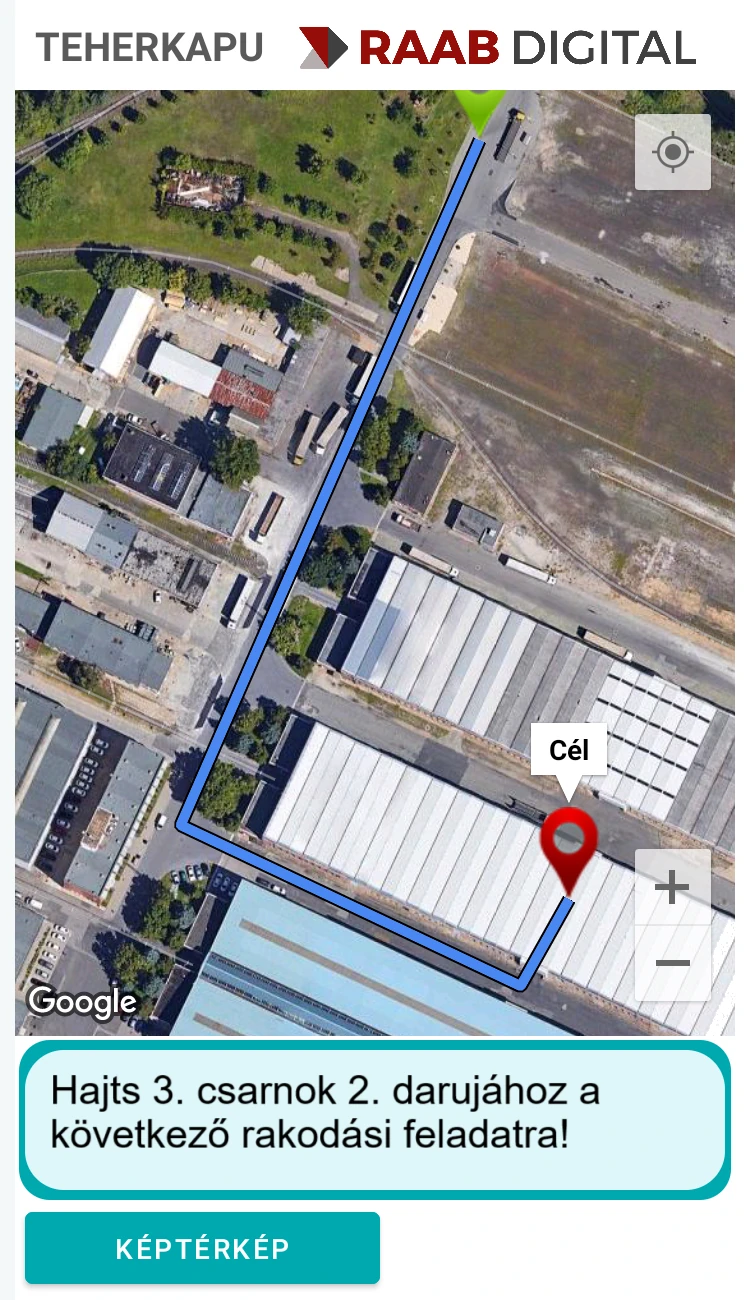
The driver sees the route to the next location on a map, with a short instruction on where to go and what to do.
Truck caller devices send GPS and BLE (iBeacon) positions, so vehicles can be tracked both outdoors and inside halls.
Battery level, last communication and version per device; inactive truck callers are flagged.
On arrival the driver checks in (kiosk, web app or gatehouse) and receives a truck caller or uses their phone.
The driver waits in the designated waiting area - not at the gate or on the road.
When the loading bay is free, the warehouse clerk calls the vehicle.
The driver drives to the location shown on the map; the system records the timestamps.
The driver is notified with sound and visual signals on a truck caller device issued at the gatehouse or on the web interface on their phone. The call is triggered by the warehouse clerk or gatekeeper.
The driver interface is available in ten languages: Hungarian, English, German, Slovak, Romanian, Serbian, Polish, Ukrainian, Russian and Turkish.
Yes. Truck caller devices send GPS and indoor BLE positions, which appear on the yard management map.
Request a callback from our expert, or set up a demo for your site in 10 minutes with just a few details.